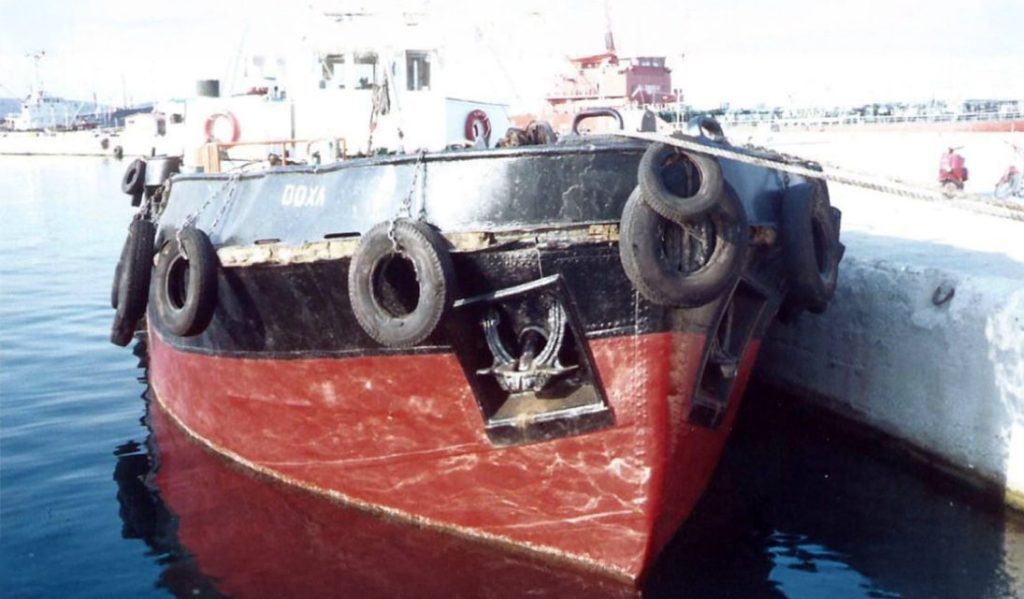



The company Giannaros Shipping & Transport was founded by Captain Vassilis in June 1990, in Piraeus.
- Since 1990 the company operates in maritime transport, both as the owner and manager of small tankers, in Greece, the Eastern Mediterranean, and the Black Sea.
During the same period, it performs transportation for ship refueling, with owned vessels [bunker barges], on behalf of Fuel Trading Companies for transit [fuel oil, gas oil & lub oil]. - Since 1997 Since 1997, the company has been operating in the Passenger-RoRo and Freight-RoRo sectors, undertaking maritime transport of machinery and other construction site wheeled equipment to islands and other destinations — a service it continues to provide to this day.
- Since 1998 the company operates in Land Transport of "Non-Hazardous Solid Waste", with codes EKA 190805 – EKA 190801 – EKA 190802 – EKA 190902 – EKA 190812. It also owns Public Use Trucks, suitable for the transportation of cargo in the above categories.
- In 2008 the Land Transport operations were transferred to Captain Vassilis' sons under the name 'GIANNAROS P. – GIANNAROS N. G.P.' For this activity, the company is registered in the Register of Non-Hazardous Solid Waste Management and has been authorized by all the Regions of mainland Greece.
- The company is certified with:
- Quality Management System ISO 9001: 2015
- Transport Management System ISO 28000: 2022
- Road Transport Management System ISO 39001:2012
- Corporate Social Responsibility System SA 8000:2014
- Transport Management System ISO 14001: 2015
- Transport Management System ISO 45001: 2018
Company Policy
- To provide high-quality services regarding the maritime and land transport it undertakes.
- To provide safe passenger and vehicle transport services through continuous staff training and the ongoing maintenance of its vessels.
- To provide a healthy and safe working environment for its staff.
- To ensure the improvement of its environmental performance and take the necessary measures to protect the environment from its activities.
- To improve its capabilities in matters concerning the safety of its vehicles.
- To ensure the effective execution of the services it undertakes.